
by GC-admin
Share
by GC-admin
Share
For
people of all ages, skin cancer is a risk – it’s the most commonly diagnosed
form of cancer in the United States, in fact. For those who are older and lived
during years where sunscreen wasn’t as effective or as widely used, however,
risk of skin cancer may be even higher.
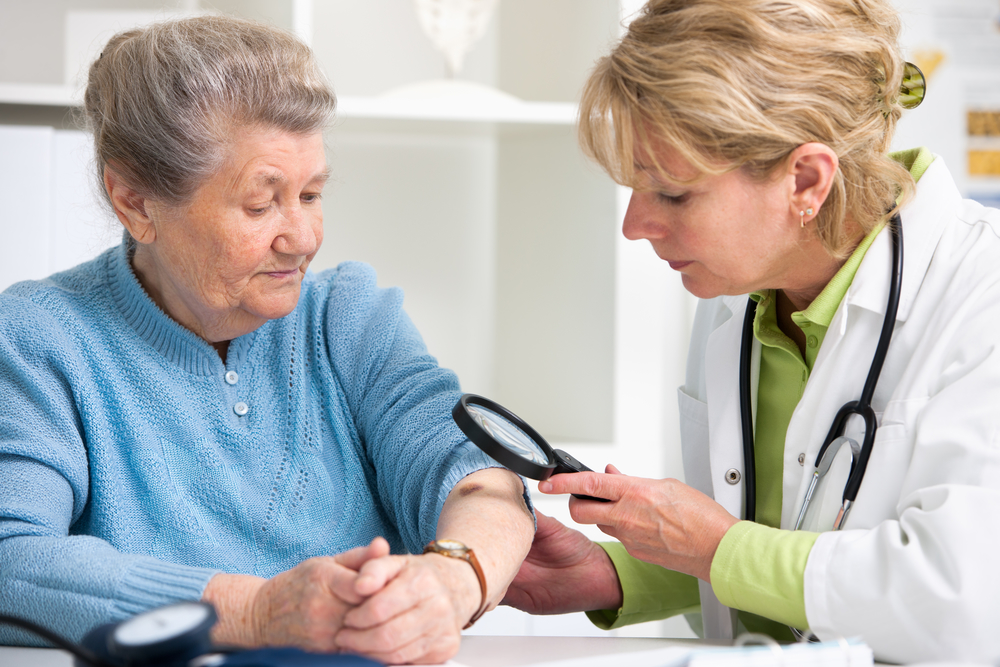
At Cozy Retire, our caring services include helping seniors in our assisted living facility with several health-related areas, including checking for and helping prevent things like cancer formation. One especially common and dangerous form of skin cancer is called melanoma, which is responsible for a majority of skin cancer deaths – but is also treatable if it’s found and addressed early in the process. With that in mind, let’s go over some early symptoms of melanoma and self-checks seniors can perform (with help from a caregiver if needed), plus some risk factors caregivers can help senior loved ones be aware of when it comes to preventing melanoma risks.
Melanoma
Symptoms and Self-Exams
The
American Academy of Dermatology encourages all adults, particularly seniors who
have undergone major sun exposure in their lives, to perform regular self-exams
to check for melanoma. During these checks, use the “ABCDEs” of melanoma, which
conveniently describe its primary early symptoms:
- Asymmetrical: Moles on the skin where one part of the mole is
unlike the other – these should be examined by a doctor. - Border: Moles that have a strangely-shaped border.
- Color: Moles that are varied in color – these are sometimes
no major concern, but sometimes could be a sign of melanoma. - Diameter: Moles at least 6 millimeters in size, or around the
size of a standard pencil eraser, should be examined. - Evolving: If you notice changes in size or shape of a given
mole, or notice that a single mole is noticeably different from others nearby,
this could be a sign as well.
Melanoma Risk
Factors
In
addition, here are some risk factors that have been linked with melanoma:
- Sunburn or sun exposure history: Those who have had major sun exposure or sun damage, particularly during their younger years, will be at higher risk of developing melanoma.
- Family history: If a first-degree relative (parents, children, siblings) has had melanoma, your chances of getting it are higher.
- UV radiation exposure: These rays are found in tanning beds, sun lamps and even in the actual sun.
- Skin tone: People with fairer skin are at higher risk of sunburn, and therefore at higher risk of melanoma. Caucasian people with blonde or red hair and blue or green eyes are at particularly high risk.
- Mole presence: As we noted above, moles can develop into melanoma.
- Location: Those at higher elevations and those closest to the equator may be exposed to more UV light, and therefore could be at higher risk.
- Immune system: Anyone with a compromised immune system, including seniors with chronic health issues, will be at higher risk.
- Age and gender: For those under 50, women are at slightly higher risk of melanoma than men. Once the 50-year barrier is crossed, however, men become at higher risk than women.
For more on the risks of melanoma in seniors and how to watch for and prevent them, or to learn about any of our senior living services, speak to the caring staff at Cozy Retire today.
The post Tips on Recognizing and Preventing Melanoma in Seniors appeared first on Cozy Retire.
STAY IN THE LOOP
Subscribe to our free newsletter.
Leave A Comment

There are many questions that people tend to have when it comes to a potential move of a senior into an assisted living community, and some of these naturally tend to revolve around costs and how they will be covered. One particularly common such question: Will Medicare pay for assisted living? At Cozy Retire, we’re

There are several common questions that often arise regarding financial areas when you or someone in your family is considering a move to an assisted living facility, and one of the most frequent is this: Is assisted living tax deductible? The answer is often yes, though there are some important nuances to be aware of.

There are a few decisions that can be naturally difficult to make in our lives as we age, and one of these for those who are approaching or have already entered senior age range is a potential move to a retirement community. While this is a step that some people resist for understandable reasons, there

While there’s often a natural and understandable focus on many areas of physical health among seniors and older adults, the realm of mental health is also one that should never be forgotten about in these age ranges. Mental health is just as important as physical health, and the two often go together – and there
